Project MCI
Master's research · UFF · SBGames 2026
Scroll down
Overview
A virtual reality serious game set in a supermarket. It records route learning, spatial memory and task sequencing for research into mild cognitive impairment and early Alzheimer's disease.
Role & Stack
Researcher · VR developer
Unity, C#, VR, Telemetry
Links
The research instrument
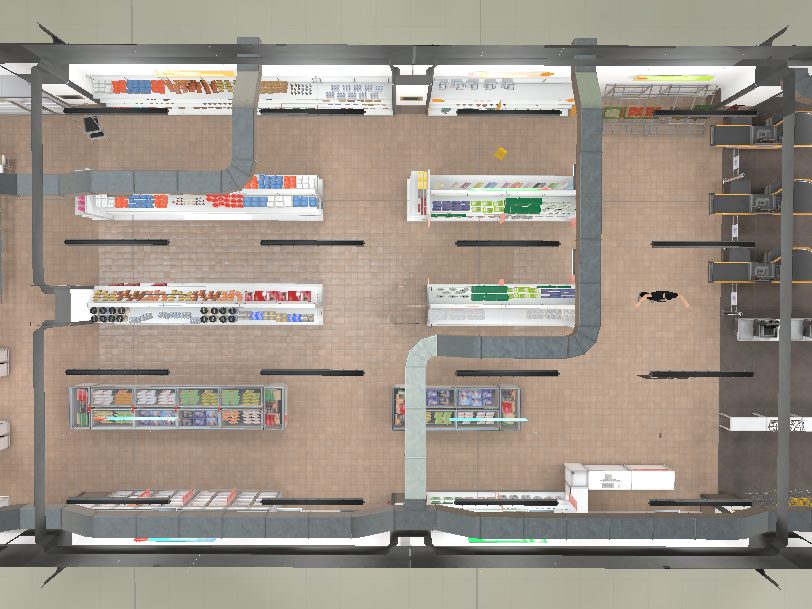
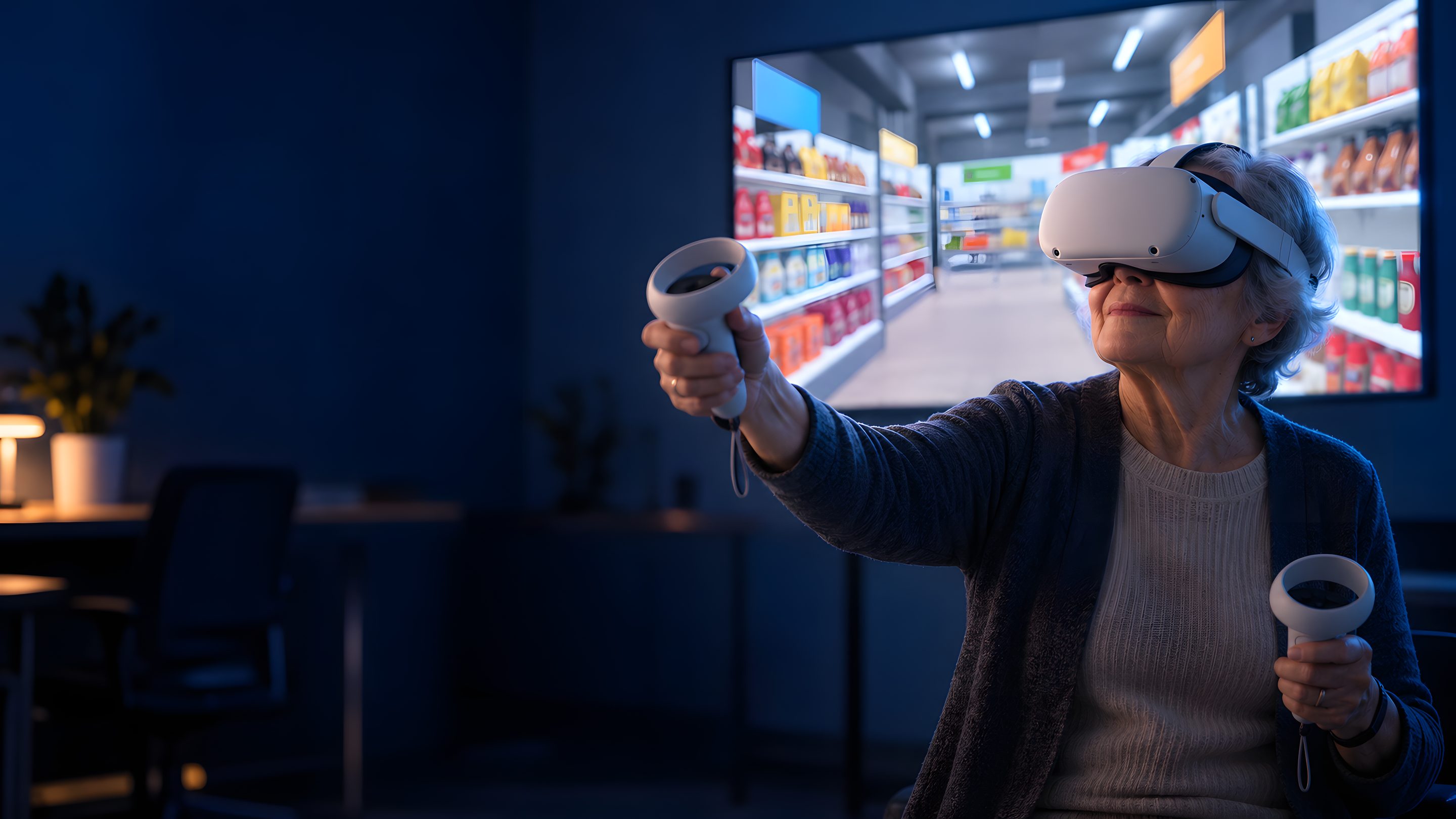
This 2026 master's research project is a Unity virtual reality serious game for studies of mild cognitive impairment and early Alzheimer's disease. Developed at UFF with researchers from UFF, USP and LNCC, it places older adults in a supermarket task that assesses route learning, spatial memory and sequential execution.
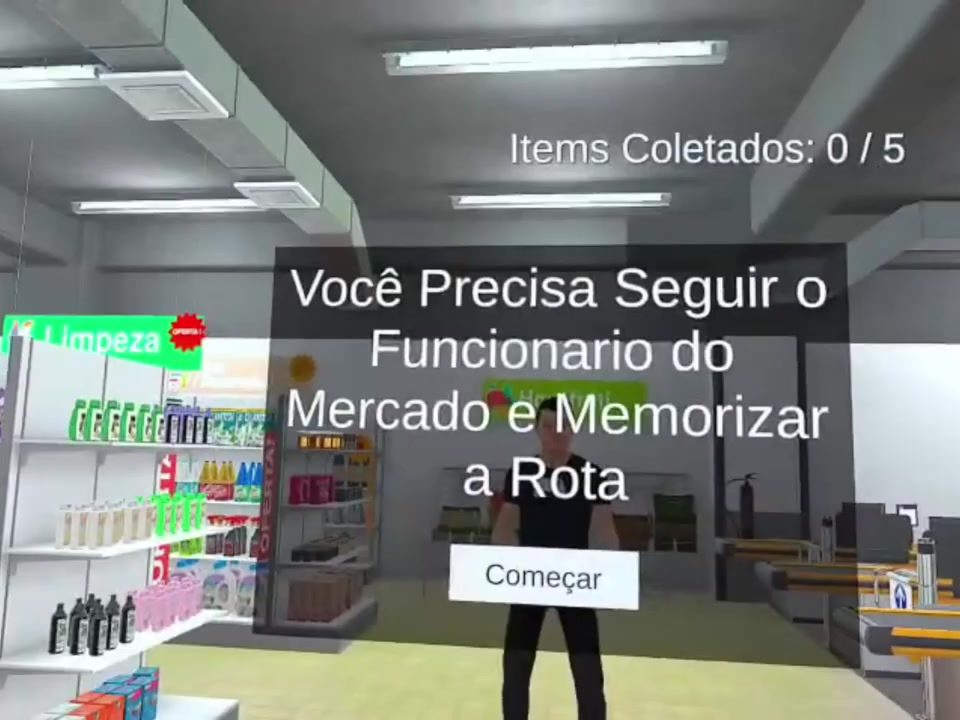
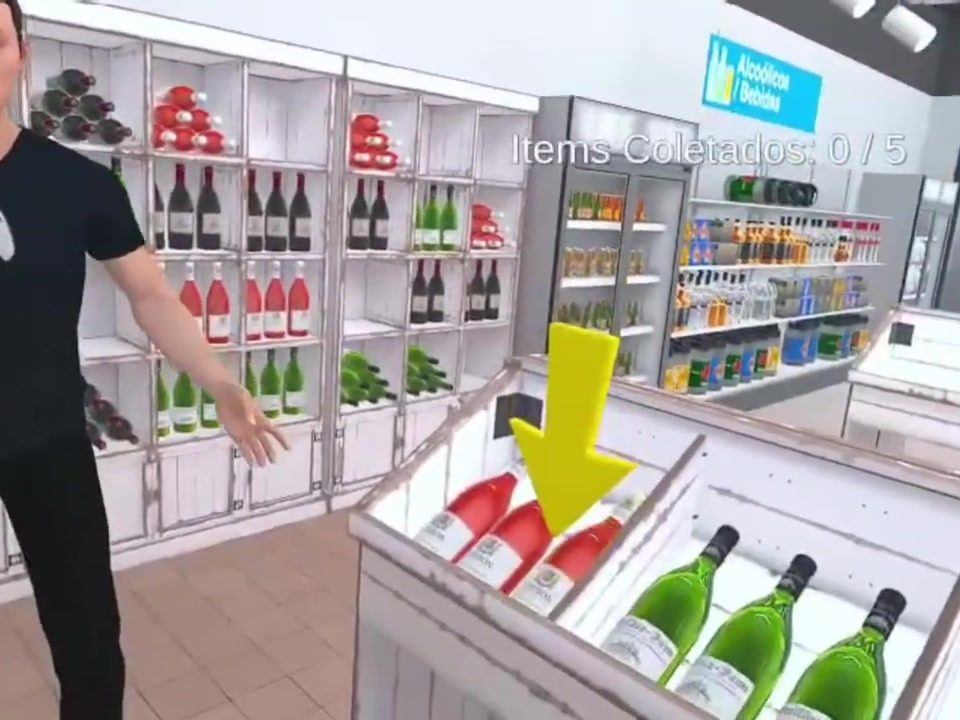
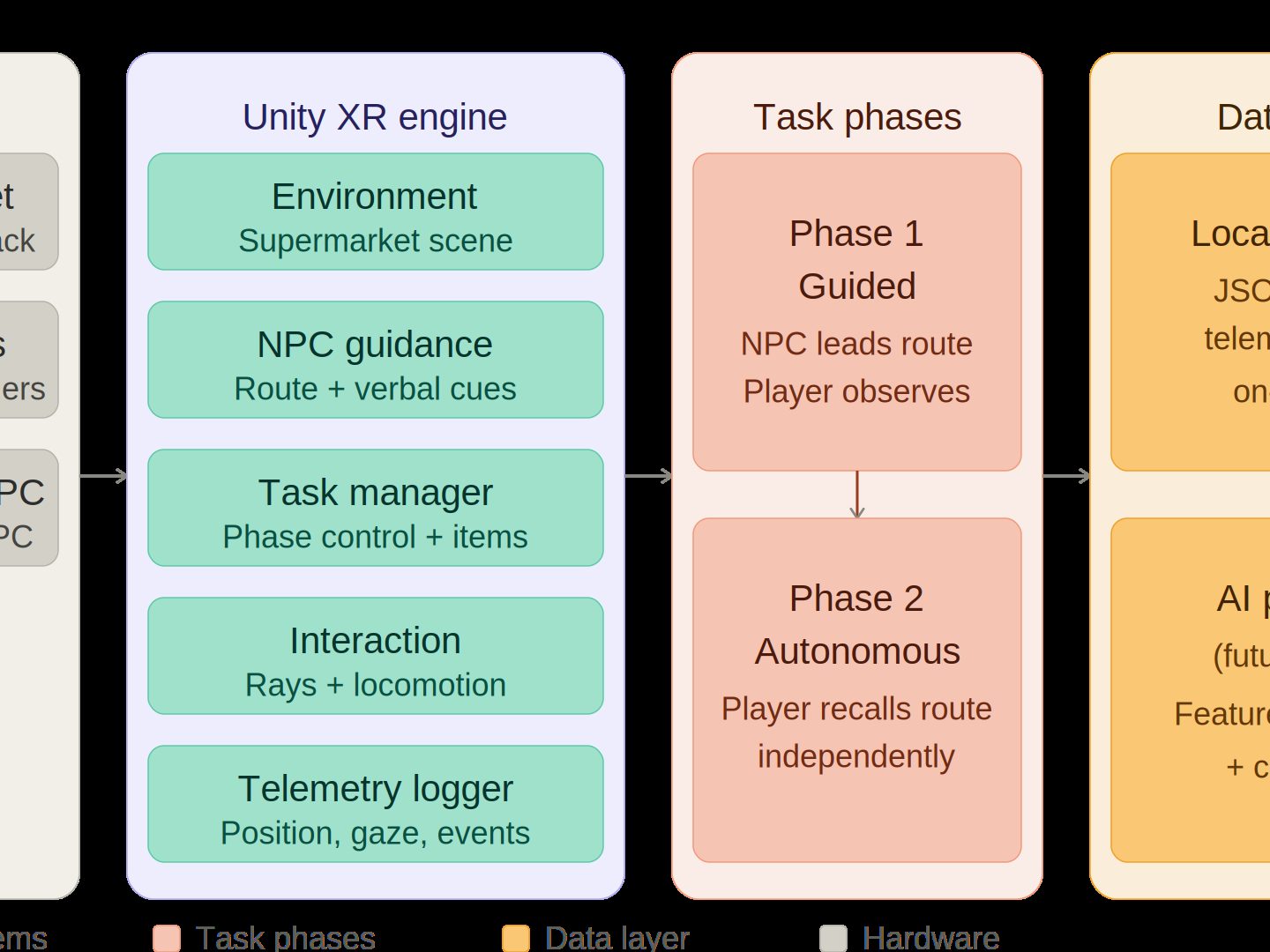
The experience has a guided phase, where an NPC demonstrates a route and names target items, followed by an autonomous phase where the participant repeats the route and collects them in order. A separate practice scene introduces locomotion and object interaction before the assessment.
What I built
I built the supermarket experience, its task logic and the first-party telemetry used by the research protocol. The game tracks the expected next item, ordering mistakes, phase completion and the participant's interactions without penalizing errors, because those errors are part of the research data.
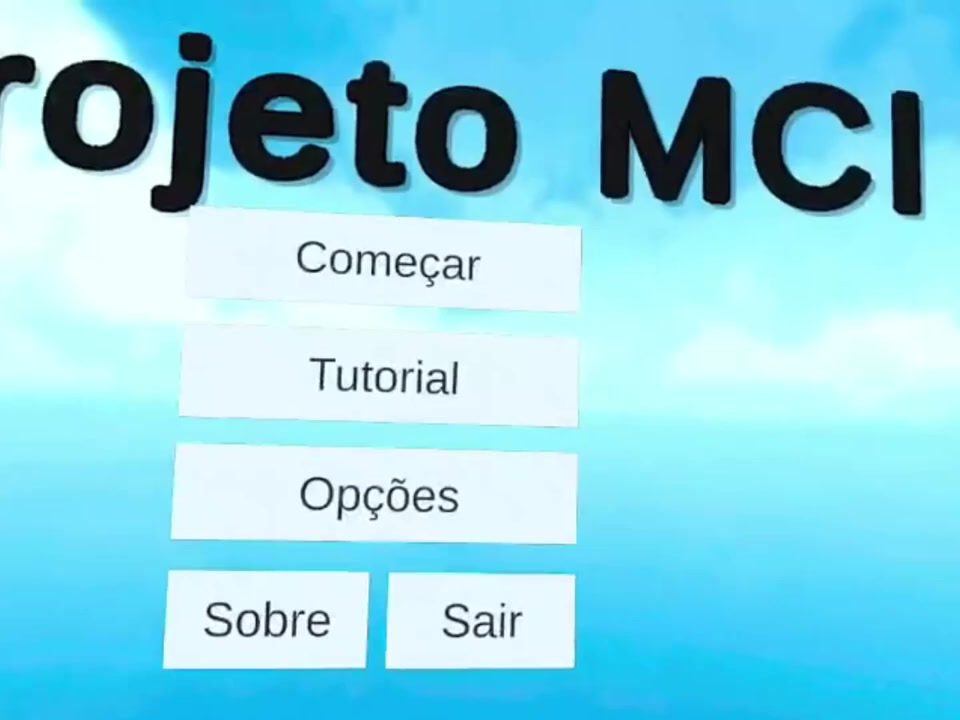
I also implemented accessibility options for the target audience, including continuous joystick movement with head-directed turning, optional teleportation, two simplified ray-selection modes and combined visual and audio instructions.

Telemetry and XR stack
The project runs on Unity 6 with URP, OpenXR, XR Interaction Toolkit and XR Hands, targeting Meta Quest and PCVR through Quest Link. Its scenes separate the start and accessibility menu, the supermarket assessment and the tutorial sandbox.
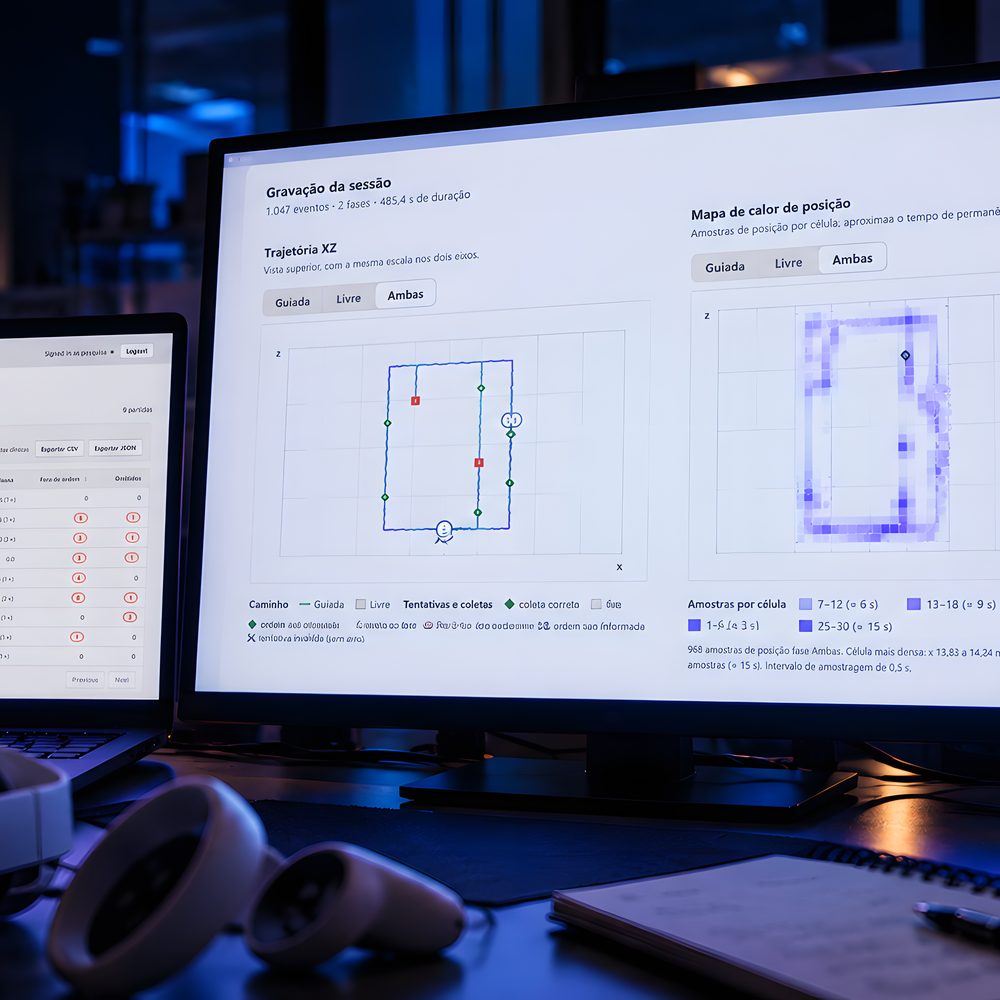
Each session is written as newline-delimited JSON in persistent storage. Events contain player position, head position and forward direction, item identifiers and correctness, timestamps, intended sequence positions, and session and phase markers, so later analysis can derive paths, deviations, error rates and sequence metrics.
Error-tolerant assessment
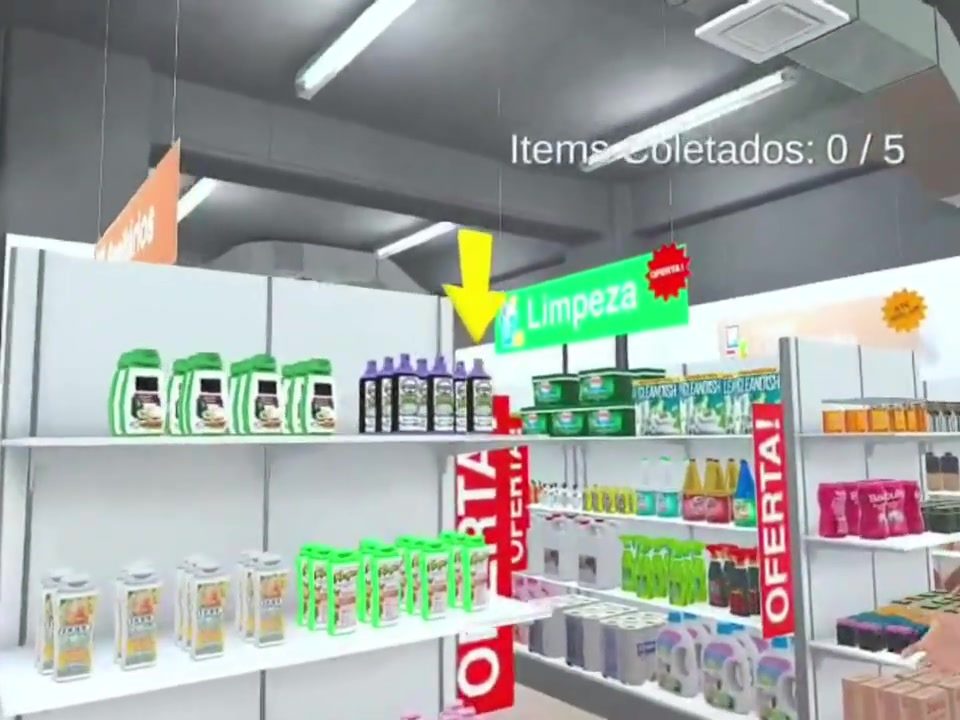
The central constraint was to make a clinical task accessible while preserving mistakes as analyzable behavior. Guidance uses an NPC, spoken item names, arrows and blinking highlights, while the recall phase records deviations instead of interrupting or punishing the participant.
The raw streams are deliberately self-contained rather than limited to precomputed scores. This keeps pilot sessions reproducible and lets researchers calculate new spatial, temporal and sequence measures offline.

The experience turns movement and task decisions into data that can be inspected after each session.
Drag to explore